
The $97 cordless washer that outruns machines four times the price
A retired hydraulics engineer spent thirty years designing industrial pressure systems. Then he priced a domestic pressure washer, decided the market had been taking liberties, and built his own.
- Free shipping
- 30-day returns
- Secure checkout
The moss had taken the patio. Not gradually — it looked like a forest floor, and it had happened over one wet winter while nobody was looking.
I had put off doing anything about it for months, and not because I did not care. It was because every option available was irritating in its own particular way.
Hire a machine: forty dollars a day, collect it, return it, and lose a Saturday. Buy one: three to four hundred dollars, for something that lives in the shed eleven months of the year. Pay someone: more than either, plus arranging a date.
The problem nobody bothered to engineer out
Every cordless washer on the market makes the same compromise, and it makes it in one of two directions.
Either it carries a big tank and a weak motor — so it runs a long time and cleans nothing — or it has a decent motor and a tank the size of a kettle, which means you refill it every ninety seconds and give up.
The interesting move is to stop carrying water at all.
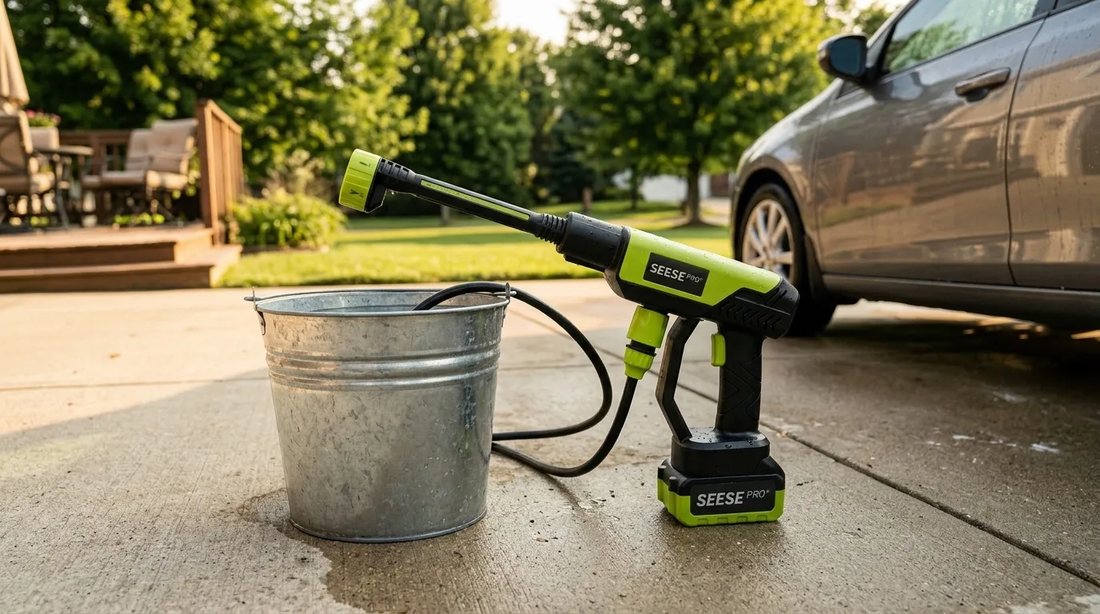
Drop a weighted intake hose into a bucket, a water butt, a pond, a lake — anything with water in it — and the machine draws its own supply. There is no tank to run out because there is no tank.
Four choices that make the trade-offs go away
01
Self-priming intake
Draws from any standing water rather than carrying it. Bucket, butt, jerrycan or the lake you are standing next to.
02
Brushless motor
More of the battery becomes pressure instead of heat, and there are no brushes to wear out.
03
Swappable battery
Runs about 35 minutes. A second pack is the difference between a job and half a job.
04
Six nozzles
0° pencil jet through to a soap fan, so you are not using a scalpel on your car paint.
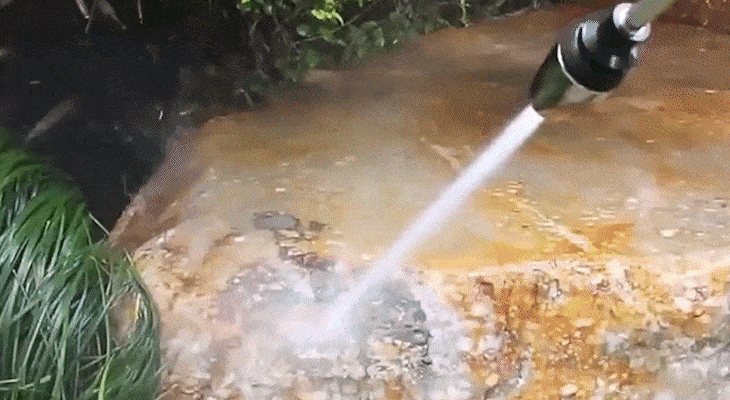
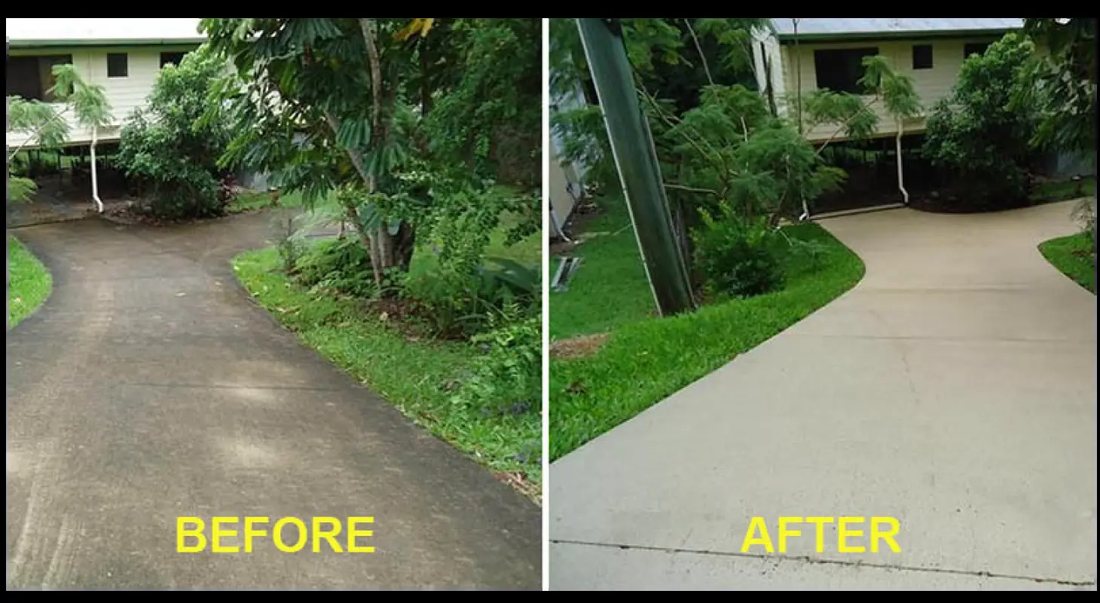
What it actually cleared, in order
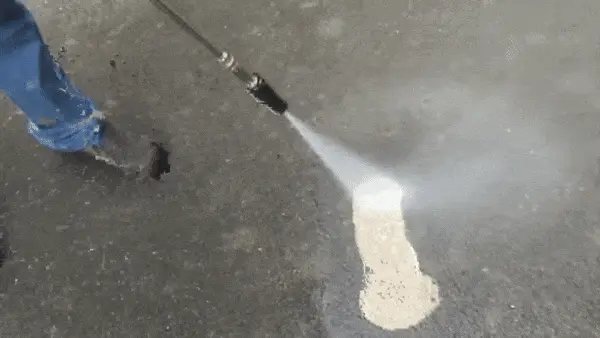
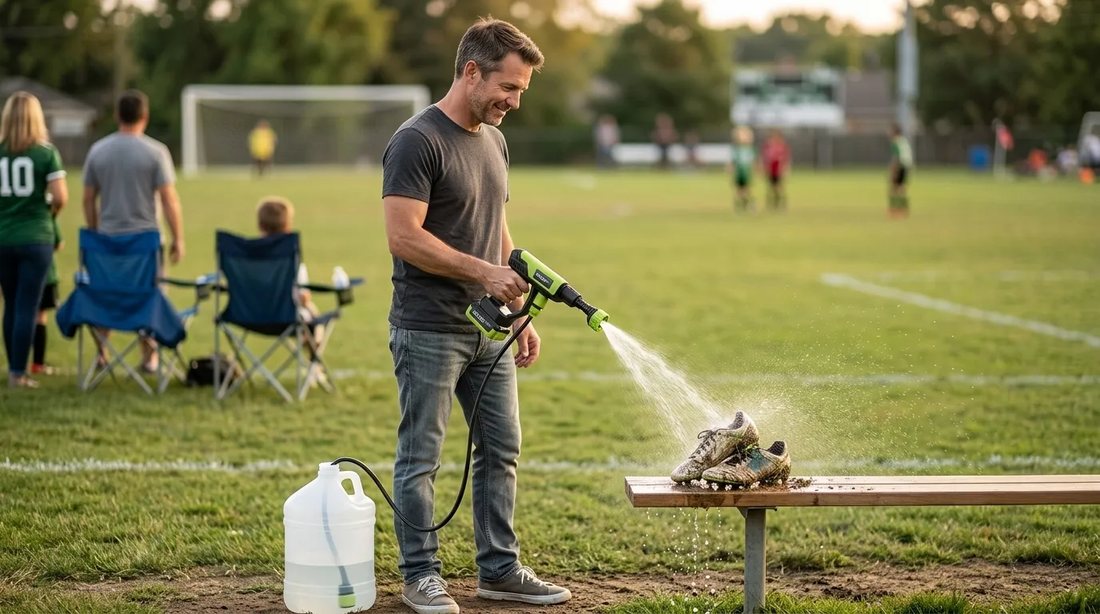
I started with the patio because that was the point. Then, as these things go, I did not stop.
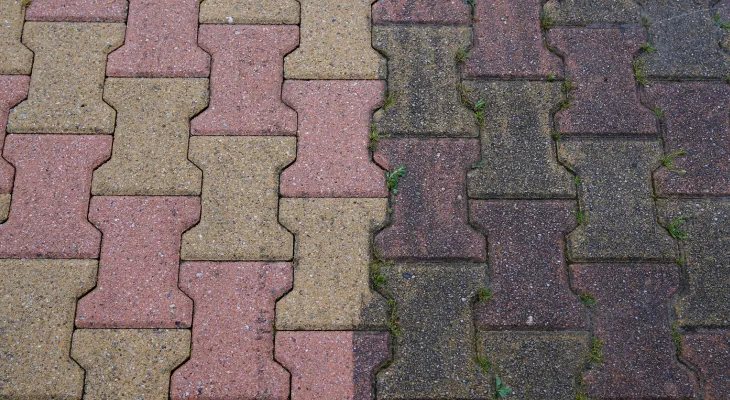
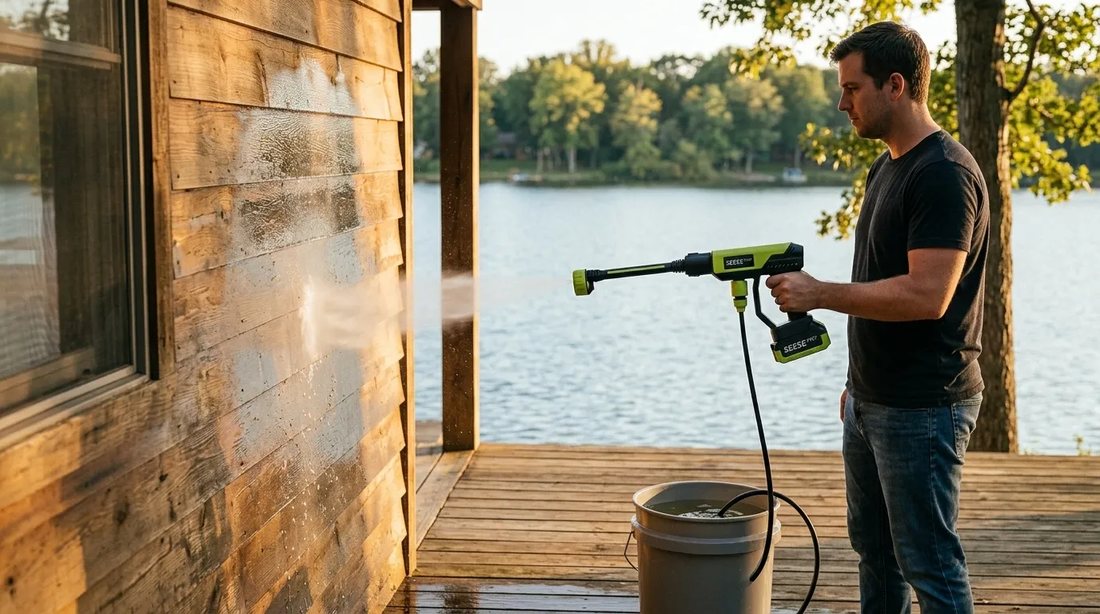
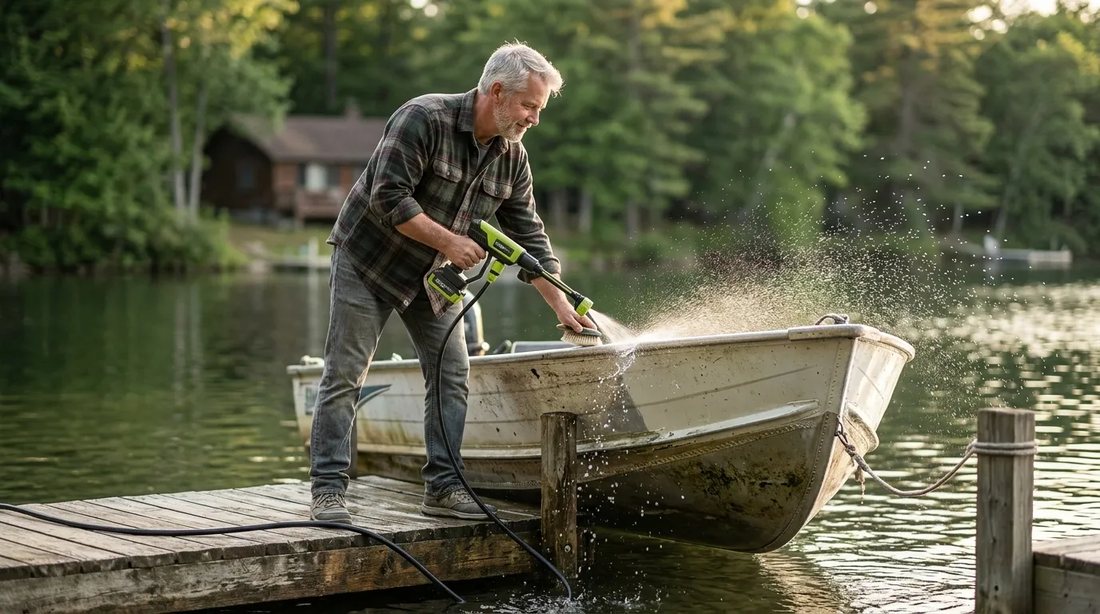
The boat is the one worth dwelling on, because there is no tap on a jetty. The intake went over the side into the lake and it ran until the battery gave out.
Who it suits, and who should skip it
Worth it if
- You have patio, decking, paving or a driveway
- You wash a car, bike, boat or trailer
- There is no convenient outdoor tap
- You want it stored in a case, not wheeled out
- Camping, allotments, horseboxes, muddy dogs
Skip it if
- You need to strip paint or render — buy a petrol unit
- You clean commercially, all day, every day
- You want continuous runtime without swapping packs
- You already own a good mains washer and a tap
The honest limitations
It is not a petrol machine and it does not pretend to be. Ground-in oil on a garage floor took several passes and did not fully lift.
Thirty-five minutes per battery is thirty-five minutes. A whole driveway in one go needs two packs, and the second pack is an extra cost the headline price does not include.
And a bucket empties. Drawing from a 10-litre bucket, you will be refilling the bucket instead of refilling a tank — which is faster, but it is not nothing.
What buyers actually say
“Used it off a water butt for the whole back garden. Did not expect a battery unit to shift lichen off the slabs but it did.”
“Great for the car and the bins. Buy the second battery at the same time — you will want it on day one, not in a fortnight.”
“Fine for light work. I expected more punch for stripping the decking and ended up hiring a proper machine for that anyway.”
Launch pricing
$195 $97
Includes six nozzles, battery and charger
View product details- Free shipping
- 30-day returns
- Ships from the US